





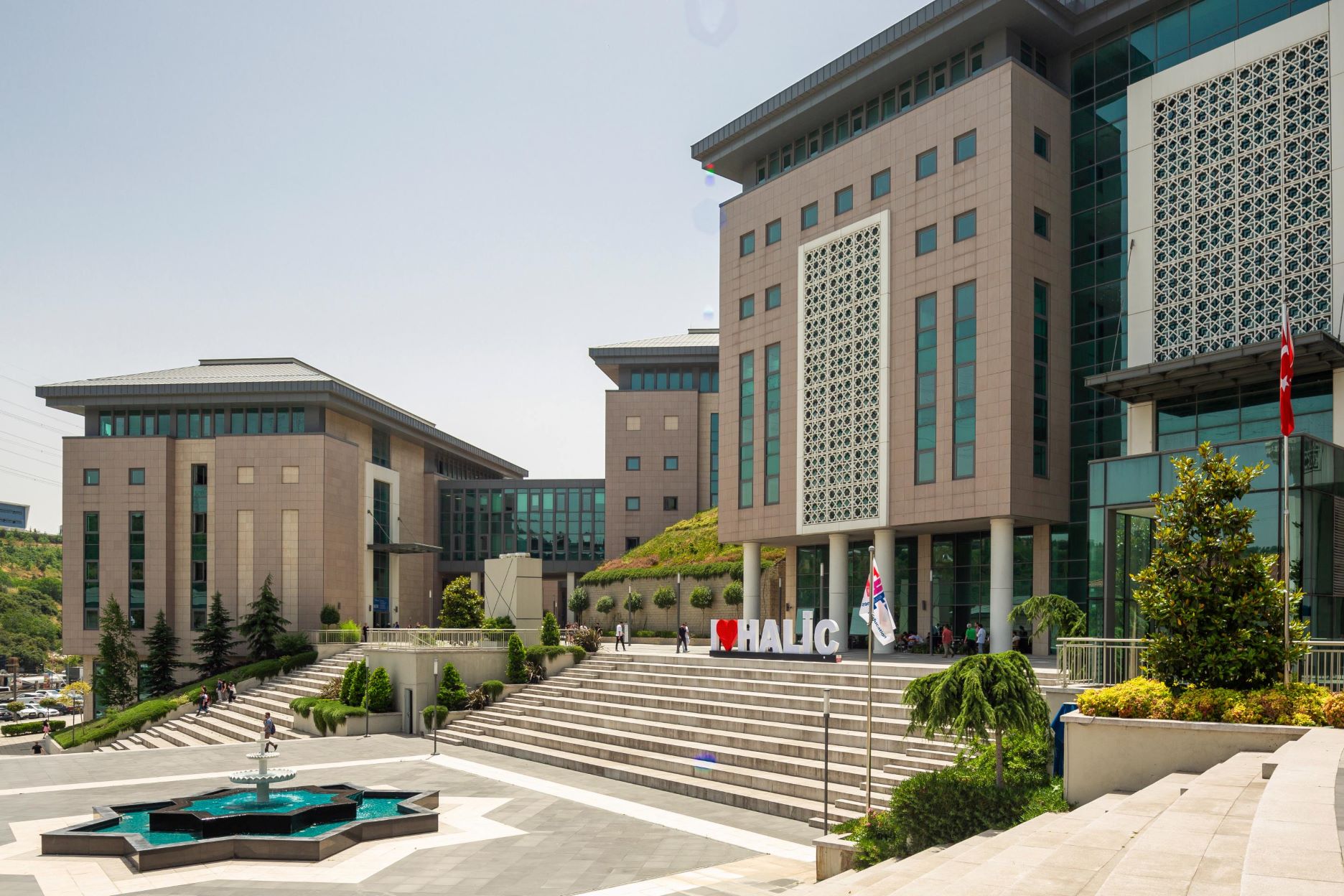


Our University Introduces the Hydro-Cognitive Heritage Framework to the World at COP31
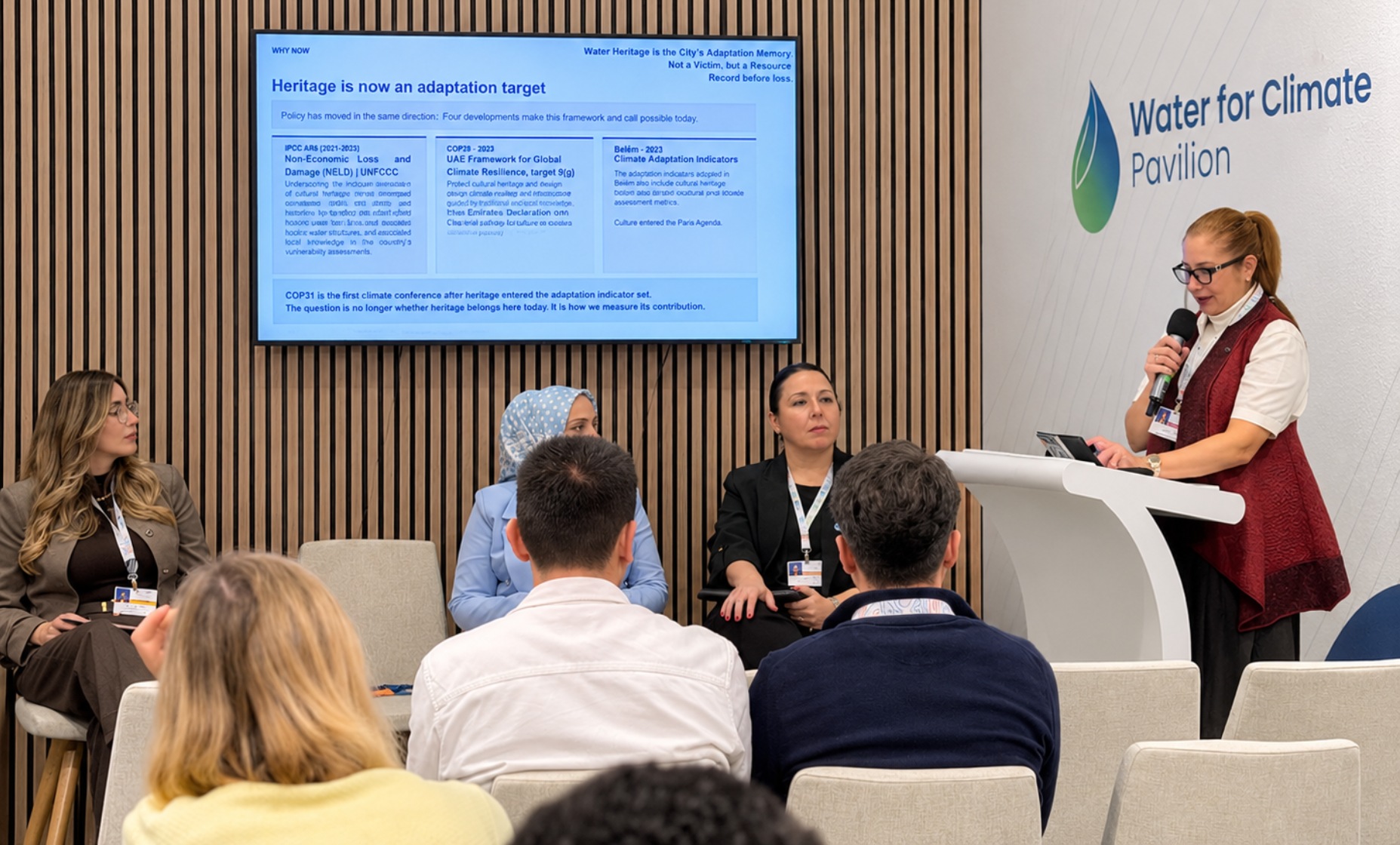
The UNESCO Chair on Integrated Management of Heritage, Water and Climate Change (HEWACC) at our University held a session titled “Water Heritage as Adaptation Memory: The Hydro-Cognitive Heritage Call for Action” at the United Nations Climate Change Conference (COP31), hosted by Türkiye in Antalya. The session took place on Wednesday, 18 November 2026, at the Water for Climate Pavilion (SIWI) in the Blue Zone, on the day of the COP31 programme dedicated to cultural heritage and traditional and local knowledge.
Established through an agreement signed between UNESCO and Haliç University in February 2024, the Chair addresses heritage, water and climate change through an integrated approach. The session at COP31 brought the Chair’s accumulated knowledge and experience to the international climate agenda.
From Haliç to the World: “Five Scales, Five Concepts”
At the heart of the session were the concept of Hydro-Cognitive Heritage, developed by Yeşim Doran Taş, Executive Co-Chair of HEWACC, and the “Five Scales, Five Concepts” methodology. The framework was first presented on 15 October 2026 at Haliç University’s “Towards COP31” webinar.
Doran Taş explained the methodology, which examines water heritage across five scales, from the human body to society: climate shelter at the body scale, adaptation at the structure scale, water stewardship at the watershed scale, climate resilience at the coast scale, and climate literacy at the societal scale. Drawing attention to the recognition of cultural heritage among the indicators of adaptation in climate negotiations, Doran Taş summarised the essence of the approach in a single statement:
“Water heritage is the city’s adaptation memory. Not a victim, but a resource. Let us document it before it disappears.”
Historic Shipyards Along the Golden Horn in Focus
Assoc. Prof. Gözde Çakır Kıasıf from the Faculty of Architecture at Haliç University applied the framework at the coastal scale and assessed the climate resilience of historic shipyard heritage along the Golden Horn through three examples. The Rahmi M. Koç Museum, Tersane Istanbul and the Golden Horn Shipyard were examined in terms of exposure, functional continuity and social ties.
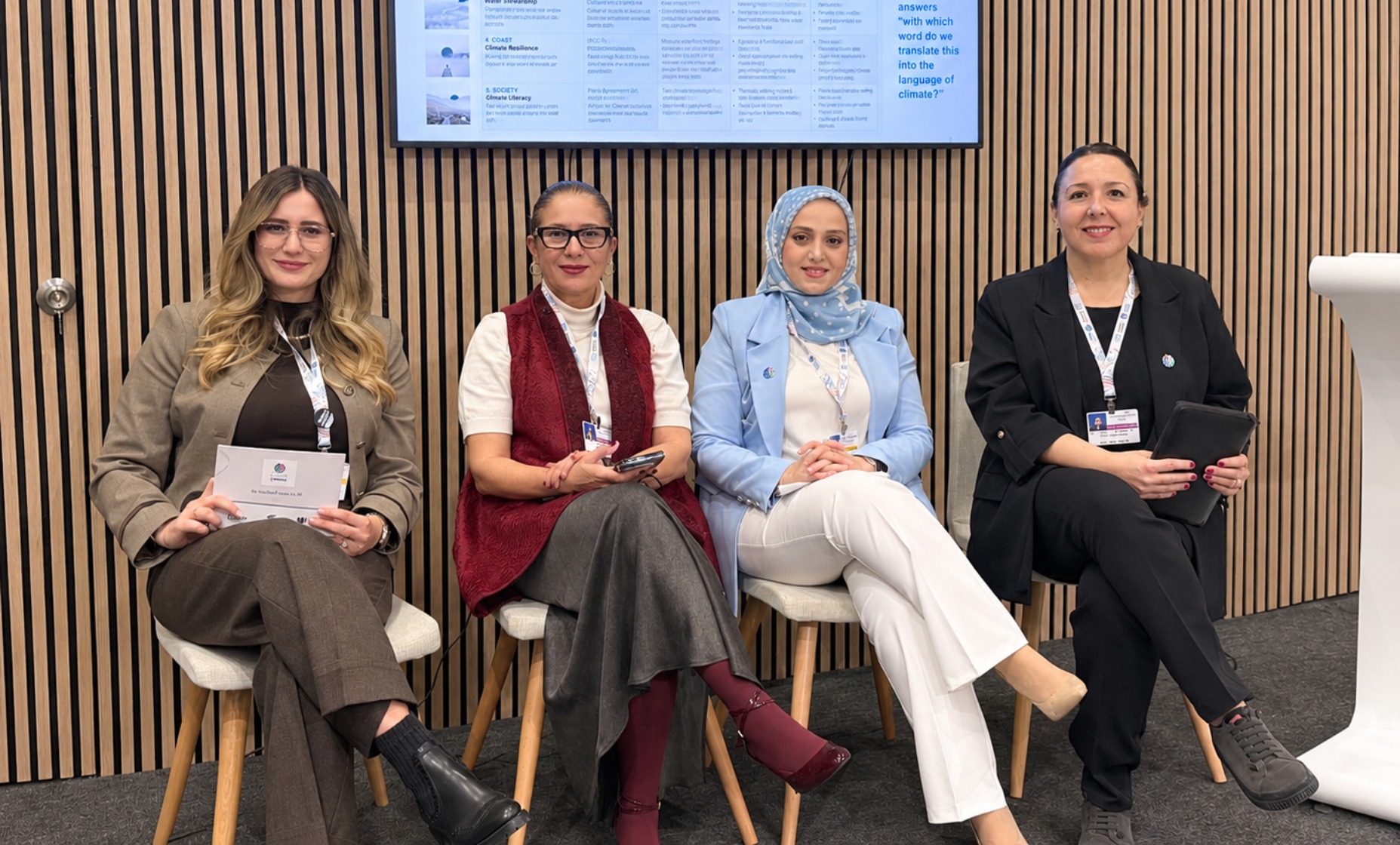
Zuhal Ayanoğlu, Architect (M. Arch.), Conservation Architect and Cultural Heritage Expert, drew on her experience in public institutions and local governments to explain how the Call for Action could be implemented by local governments and public institutions. Ayanoğlu presented her recommendations on a shared pilot site and selection criteria, a comparable data protocol, and the allocation of responsibilities among institutions. Prof. Carola Hein, Chairholder of the UNESCO Chair on Water, Ports and Historic Cities at TU Delft, also contributed to the session through a video message. The session was moderated by Berilşah Karan, Researcher at Lex Maris.
A Three-Step Call to the Mediterranean Basin Through the Golden Horn Water Memory Pilot Project
The session was designed not as a concluding report but as an invitation. The Chair issued a three-step Call for Action to cities, institutions and researchers across the Extended Mediterranean Basin.
The first step of the Call, “Bring a Site”, invites participants to add a water heritage site from their respective cities to a shared inventory. Under the second step, “Share a Method”, participants are invited to describe the methods they use within the framework of five scales and five concepts. The third step, “Record Before Loss”, calls for the documentation, before they disappear, of losses such as buried streams, lost piers and fading fountains.
The pilot project proposed within the scope of the Call for Action, titled “Golden Horn Water Memory: A Scalable Water Heritage Experience and Living Open Data Laboratory for the Extended Mediterranean Basin”, is currently at the proposal stage.
Collaboration Extending from the Workshop to COP31
The initiative took shape through the “Towards COP31” webinar held on 15 October 2026 and the “Water as Heritage Workshop II”, organised at Haliç University on 6 November 2026 with international participation.
The Chair expressed its gratitude to WSDAC (Water for Sustainable Development and Adaptation to Climate Change), under the auspices of UNESCO; the UNESCO Chair for Cultural Heritage and Urban Design at RWTH Aachen University; the UNESCO Chair on Water, Ports and Historic Cities at TU Delft; Iuav University of Venice; and Barcelona City Council for their contributions to the workshop and the COP31 session. Barcelona City Council had shared its methodology concerning its network of climate shelters during the workshop.
Following COP31, the Chair plans to determine common protocols and data fields in December 2026 with the institutions participating in the Call for Action. In 2027, it also plans to submit applications for international funding programmes together with its partners.


 Summarize with ChatGPT